

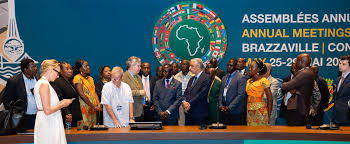

Nairobi, Kenya// – As the African Development Bank Group (AfDB) convened governments, investors and development partners at its 2026 Annual Meetings in Brazzaville, over 30 civil society organisations under the Stop Financing Factory Farming coalition are calling for greater transparency, accountability and clearer safeguards in how agricultural finance is shaping the future of Africa’s food systems.
At the centre of growing concern is the scale and direction of agricultural financing expected to flow through the Bank’s flagship Feed Africa Strategy, which estimates that transforming African agriculture will require between $315 billion and $400 billion over a decade, with the AfDB committing US$24 billion to help catalyse additional public and private investment.
Civil society groups warned that while increased agricultural investment is urgently needed to address hunger, climate shocks and food insecurity, financing models that prioritise large-scale industrial agriculture without sufficient environmental and social safeguards risk deepening ecological and public health challenges across the continent.
Recent AfDB-supported initiatives, including Special Agro-Industrial Processing Zones (SAPZs) and blended finance partnerships with international financial institutions indicate that agricultural lending and private-sector investment in agri-food systems are expected to expand significantly in the coming years.
“Development finance decisions made today will shape agricultural systems, land use and rural economies across Africa for decades,” Roselilly Ushewokunze, Executive Director of the Food Justice Network said.
“Agricultural finance must support food systems that strengthen food sovereignty, climate resilience, biodiversity and community wellbeing while empowering locally rooted, sustainable food production.”
Industrial agricultural expansion, particularly intensive livestock production has been linked globally to rising water use, deforestation, biodiversity loss, greenhouse gas emissions and growing pressure on smallholder farmers and rural communities.
Concerns are also growing over increasing antimicrobial use in livestock systems and its implications for antimicrobial resistance.
Studies conducted across multiple African countries between 2015 and 2019 estimated antimicrobial use in livestock production at between 3,558 and 4,279 tonnes, a figure expected to rise as industrial livestock systems expand.
“Harmful impacts can emerge indirectly when investment models prioritise rapid production growth, export competitiveness and economies of scale without fully accounting for environmental sustainability, public health, animal welfare, biodiversity protection or impacts on smallholder livelihoods,” said Salome Kahiu, External Affairs Lead at World Animal Protection.
The call comes at a critical moment for the continent, as African countries face escalating climate shocks, water stress, biodiversity loss, debt pressures and persistent food insecurity.
For civil society organisations, the question is no longer only how much agricultural finance is mobilised, but what kind of food systems that finance is designed to support.
They are urging the African Development Bank Group to:
- Stop financing industrial livestock production models that contribute to environmentally destructive land conversion, unsustainable water use, and ecosystem degradation
- Increase support for smallholder farmers, pastoralists, women producers, Indigenous Peoples and local communities
- Scale up investment in agroecological and climate-resilient farming approaches;
- Improve transparency and accountability around agricultural lending portfolios and value chain investments
- Avoid financing industrial livestock production models linked to environmentally destructive land conversion, unsustainable water use and ecosystem degradation.
“The debate is not simply about agricultural growth — it is about what kinds of food systems are being shaped and locked in through public development finance,” Opeyemi Elujulo, Policy and Campaign Coordinator at the Stop Financing Factory Farming Coalition, said.
“The financing decisions made today will influence whether Africa’s food future is built around resilient local food systems, biodiversity protection and community wellbeing or increasingly concentrated industrial models that deepen environmental and economic vulnerabilities.”
As the AfDB Annual Meetings continue in Brazzaville through 29 May, civil society groups say the moment presents an important opportunity for the Bank to clarify how future agricultural investments will balance productivity goals with sustainability, public health and long-term resilience.
