

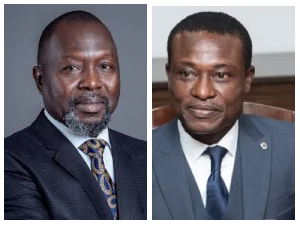
In the hallowed architecture of Ghanaian democracy, the Office of the Special Prosecutor (OSP) was conceived as the ultimate citadel against the marauding forces of corruption.
It was born with the thunder of popular acclaim, promised as an independent leviathan capable of devouring the “big fish” that had long evaded the nets of partisan policing.
Yet, today, that citadel stands in a state of curious paralysis. A legal fog has descended upon the OSP, leaving the public to wonder: how can a Special Prosecutor be “special” if he must still kneel at the altar of the Attorney General for the power to strike?
To the layperson, this is a betrayal of the promise of independence. To the lawyer, it is a fascinating, albeit frustrating, collision between statutory ambition and constitutional supremacy.
At the heart of this struggle is a sharp juxtaposition between the Office of the Special Prosecutor Act, 2017 (Act 959) and the 1992 Constitution. Act 959, and its operational twin, L.I. 2374, are masterpieces of legislative intent.
Regulation 11 of the L.I. explicitly empowers the Special Prosecutor to “take a decision” on whether to initiate prosecution. It suggests a clear, autonomous path from investigation to the courtroom.
However, law is not a series of isolated islands; it is a hierarchy. And at the summit of that hierarchy sits Article 88 of the Constitution. It is here that the OSP’s sword is effectively sheathed. Article 88(3) dictates, with uncompromising clarity, that the Attorney General is responsible for the initiation and conduct of all criminal prosecutions.
The recent judicial leanings in favour of the Attorney General are not merely a victory for one office over another; they are a stern reminder of the rigidity of our constitutional order.
The courts have effectively ruled that while Parliament can create a “Special” Prosecutor, it cannot create a “Separate” Attorney General. Because the Constitution names the Attorney General as the sole gatekeeper of the criminal justice system, the OSP’s powers under Regulation 11 are not autonomous rights, but delegated privileges.
This creates a profound moral and legal quandary. If the OSP requires a case-by-case “fiat” or authorization from the Attorney General, does it not risk becoming a mere shadow of the very executive it is meant to check?
The irony is biting: the Minister of Justice, who serves as the Attorney General, is the one who issued the very regulations (L.I. 2374) that seem to grant the OSP power, yet in the courtroom, the same office argues that those powers are conditional.
The reasoning of the court is anchored in the “Unalienable Responsibility” doctrine. The Attorney General is a creature of the Constitution, accountable to Parliament and the people.
If the OSP were allowed to prosecute entirely at its own whim, without the oversight of the Attorney General, it would create a “fourth branch of government” unknown to our basic law. In the eyes of the Judiciary, a prosecution “at the suit of the Attorney General” is not a mere formality; it is a constitutional guarantee of accountability.
Yet, we must ask: Does this interpretation render the OSP a toothless bulldog? If the gatekeeper, the Attorney General, belongs to the same political house as those the OSP may wish to investigate, the potential for “prosecutorial bottlenecks” becomes a haunting reality. The law, in its majesty, seeks order, but the citizen, in his struggle, seeks justice.
We find ourselves at a crossroads where the letter of the law threatens to stifle the spirit of reform. To bridge this divide, we do not necessarily need more regulations or cleverer drafting of L.I.s; we need a fundamental reconciliation of our constitutional priorities.
Until Article 88 is amended to carve out a specific, autonomous space for the Special Prosecutor, he remains a general without a sword of his own, a formidable investigator who must borrow his weapon from the very Ministry he was designed to operate outside of.
The OSP was meant to be the cure for “business as usual,” but without constitutional autonomy, it remains a statutory guest in a constitutional house.
In the final analysis, the law must be a shield for the innocent and a sword against the corrupt. If the sword is tethered by too many strings, it matters little how sharp the blade is.
True independence is not given in a statute; it is secured in the Constitution. Until then, the Special Prosecutor’s “decision to prosecute” will remain an invitation to a dance, the music for which is still played by the Attorney General.
By Raymond Ablorh
